

Subrogation: A Roofer Ruins a Home
The Problem
The project was a two-story, wood-framed, single-family residence with a tile roof and stucco exterior walls, originally constructed in the 1970s. The home became the subject of a significant insurance claim after subcontracted repairs led to a catastrophic structural failure.
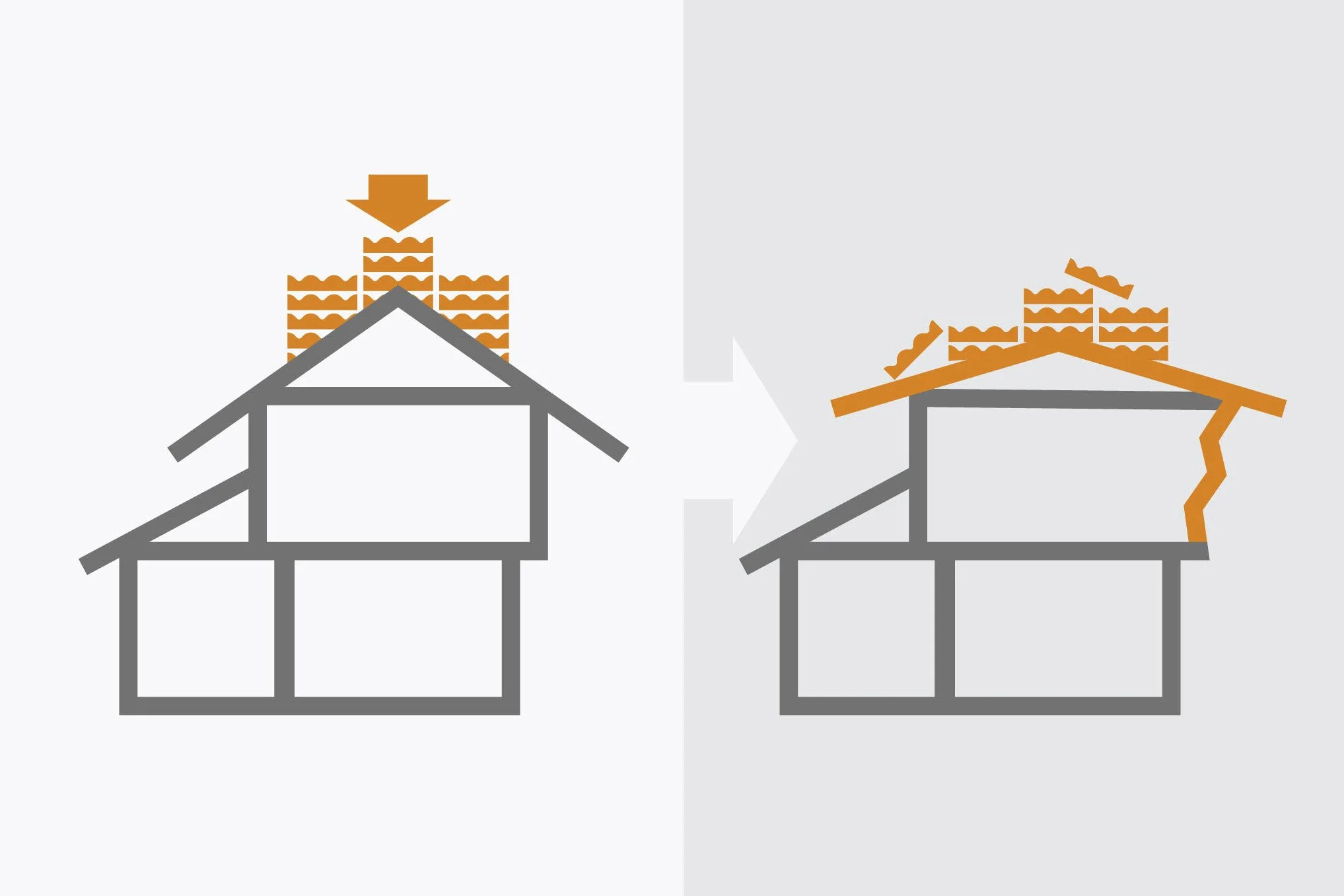
The homeowner contracted with a solar company to install solar panels on the residence. To prepare for the installation, the solar contractor hired a roofing subcontractor to perform necessary roof repairs. During the course of the work, the roofing crew removed existing concrete roof tiles—weighing approximately 10.5 pounds each—and stacked them in concentrated piles along the ridge of the roof.
The roofing crew created stacks that were 16 to 20 tiles high, resulting in concentrated point-loads exceeding 200 pounds per stack. While the owners were home and working in their respective offices, the roof structure succumbed to the massive weight and spectacularly collapsed. This caused significant structural damage to the roof framing, exterior walls, and interior ceilings.
The Solution
Pete Fowler Construction was retained by the subrogation attorney for the homeowner’s insurance company to inspect the damage, evaluate the cause of the collapse, and assess the standard of care of the work performed.
Our team performed a visual site inspection to document the structural failures. We observed that the second-story exterior wall was leaning out of plumb by approximately 16 inches, and the ceiling joists had pulled completely away from the wall framing.
Our investigation and analysis concluded the following:
Standard of Care Violation: The roofing subcontractor fell below the professional standard of care.
Ignored Industry Standards: The contractor specifically failed to follow the requirements of the Western States Roofing Contractors Association Installation Manual of Concrete and Clay Roof Tile Systems.
Improper Weight Distribution: This universally recognized industry standard provides a detailed loading guide requiring that tile weight be
spread evenly across the roof, with stacks strictly limited to between 6 and 12 tiles.
We provided a simple standard of care memo and comprehensive inspection photographs to the subrogation attorney to support the recovery of damages. By clearly demonstrating that the contractor’s loading practices were inconsistent with professional standards, we provided the technical evidence necessary to hold the responsible parties accountable.
For some reason, the roofing contractor denied liability. The law firm representing them fought the case for three years, billing tens of thousands
in fees and costs (or more) for discovery, including the depositions of numerous parties.
To break the stalemate, our team analyzed nine depositions alongside more than 50 documents totaling thousands of pages, and thoroughly prepared for our expert deposition. Ultimately, our technical evidence and preparation paid off, and the case was settled favorably for our client, shortly before our deposition.